A study carried out in partnership with universities and companies innovates in the improvement of navigation and dredging management processes
A research, development and innovation project focused on the management of navigation channels and reuse of dredged fluid mud in the Port of Açu, in Rio de Janeiro, received recognition from PIANC International in the category “Supporter of Working with Nature” The seal was granted to the Brazilian port in March this year for the development of an environmentally sustainable circular economy model and efficient dredging practices.
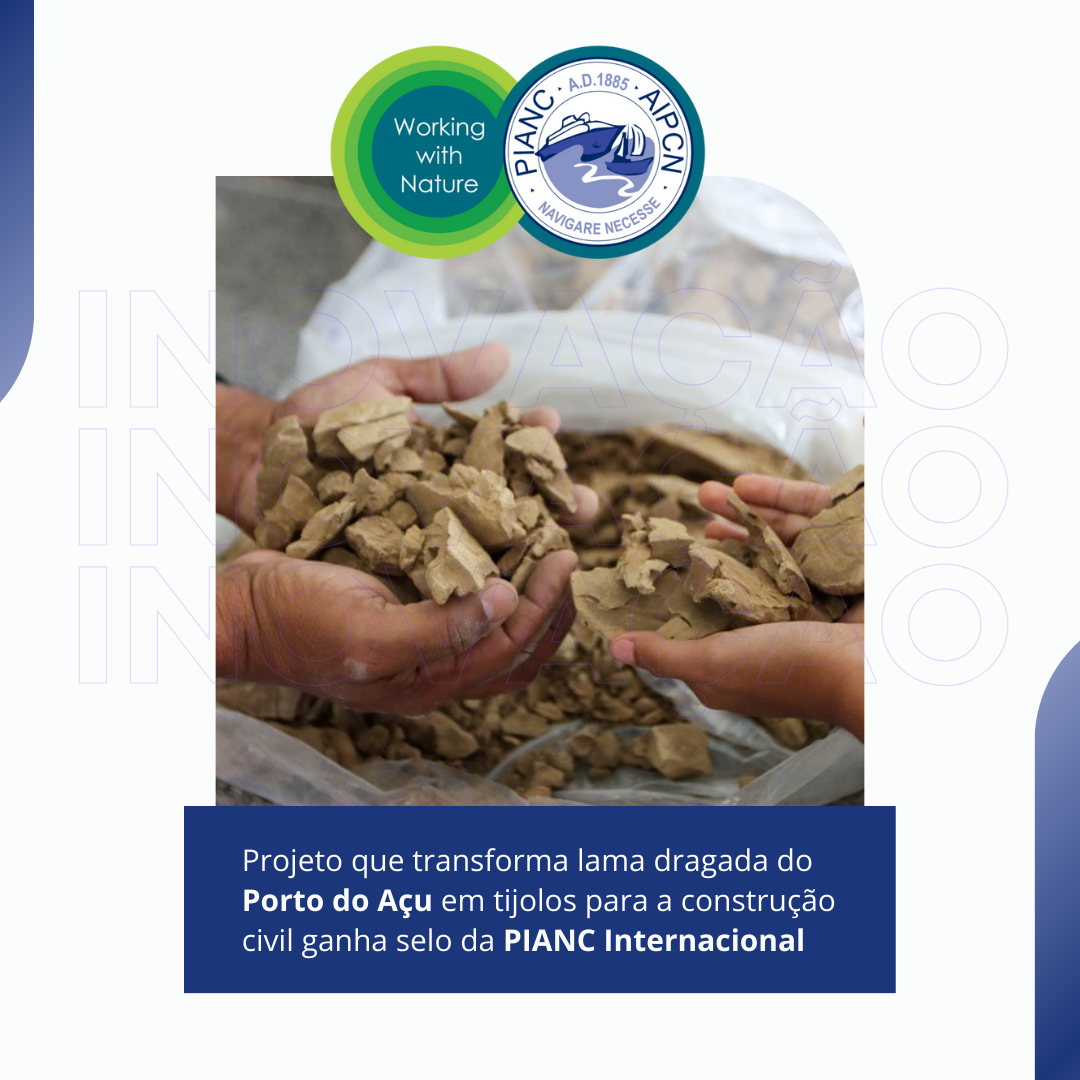
The Innovation Coordinator of Porto do Açu, Juliane Carneiro, explains that the project involved a thorough study of the characteristics of the mud and sediment removed from the navigation channel.
This process included a detailed analysis of the environment by hydrodynamic and sediment transport modelling, considering all its characteristics, in order to make the most of its particularities and identify opportunities to improve the operational efficiency of the port. In addition, the researchers also investigated the properties of the material with a focus on the production of blocks and mortar for use in construction.
“This is a very complete project. We study the characteristics of the environment to understand the processes and relate to meteorological and oceanographic data for the study of safe operating windows. At the same time, we explore how these characteristics could be used in other applications. Our focus was to question whether there are sustainable alternatives that we still need to explore and consider,” she says.
The project in Porto do Açu began about two years ago under the leadership of Juliane. However, the research on the uses of fluid mud dates back to the period of her doctorate in Oceanic Engineering, conducted at the Federal University of Rio de Janeiro (UFRJ). The research was also recognized by the American Society of Civil Engineers (ASCE) in 2016.
The methodology developed to analyse the dredged sediments of the port seabed is applicable to any port. “However, due to the variation of sediments in each site, it is important that specific studies be carried out to understand the particularities of each type of fluid mud. Further studies are needed to ensure that similar results are obtained in other ports,” the researcher explains.
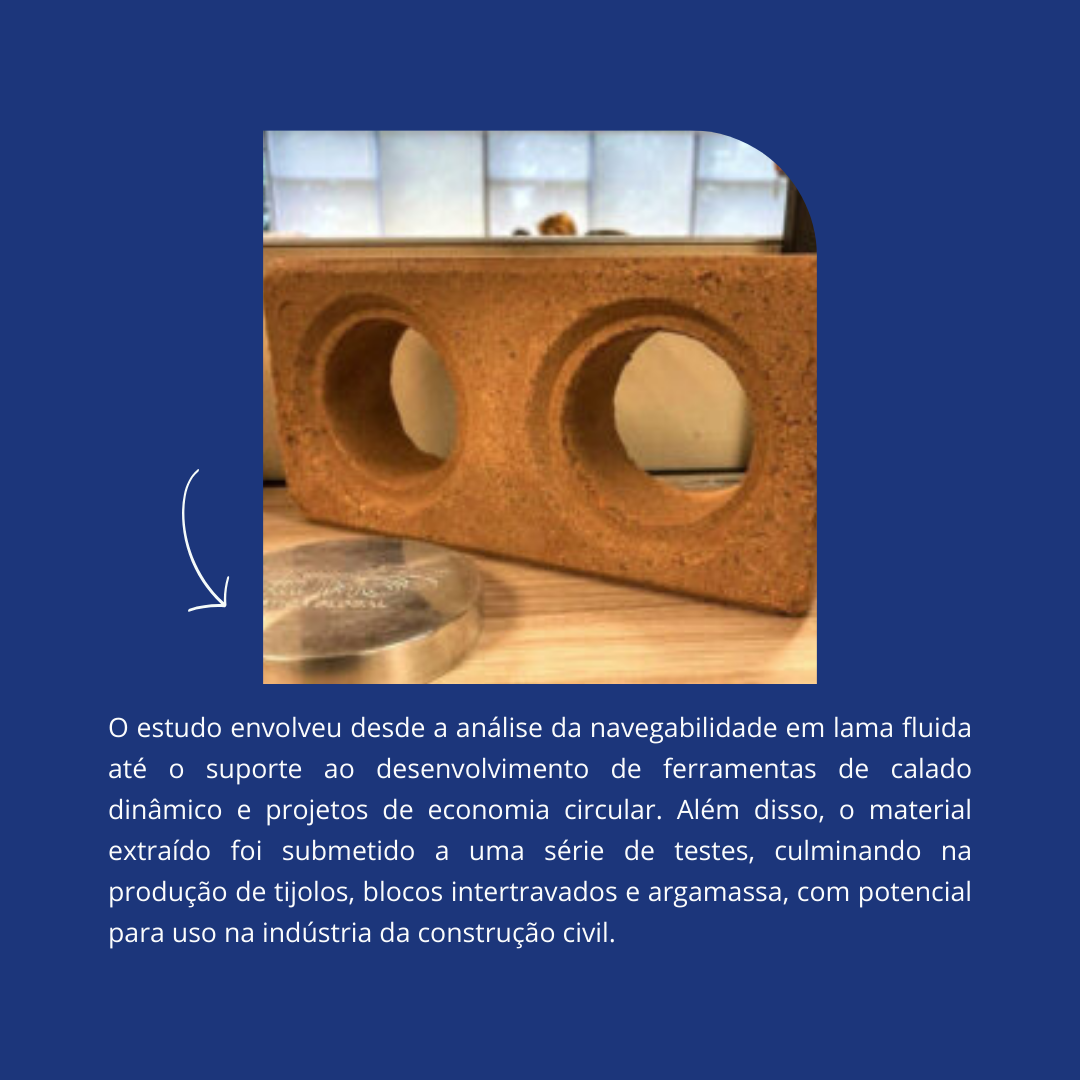
The project already has material results and resulted in the production of blocks and mortar that can be used, for example, in the port courtyard at the next moment.
For Juliane, the international recognition of PIANC to the Brazilian project is important to highlight the work of scientists in the port and navigation sector, increasing the visibility of national achievements in this area.
“In my technical vision, it is important to be inserted in the PIANC in order to follow the global developments and also to show the world that Brazil has extremely advanced projects. An organisation like the PIANC helps us to give visibility to what is done internationally and what we do here in Brazil”, she comments.
“As for my vision as a collaborator in a port, leading a front in a strategic theme, I think that being linked to PIANC helps us to be aligned to the best global practices, whether in technique, research, development or innovation. It is essential that Brazil be connected to organizations like this. We are committed to ensuring that the Brazilian reality is represented in PIANC”, she concludes.
The project was supported by the Federal University of Rio de Janeiro (UFRJ), of the State University of North Fluminense (UENF), of the startup Argonautica Engenharia & Pesquisas and company MICROARS Engenharia com a Porto do Açu Operations. In addition, the study was funded by the National Research and Development Council (CNPq), by the Innovation Company notice, with the exclusive funding of research grants for students and researchers.
The label “Supporter of Working with Nature” is an international initiative of PIANC that promotes an integrated and proactive approach to initiatives, programs, pilots and projects promoting as examples of international improvements practices. PIANC highlights these projects through the granting of a Certificate of Recognition.