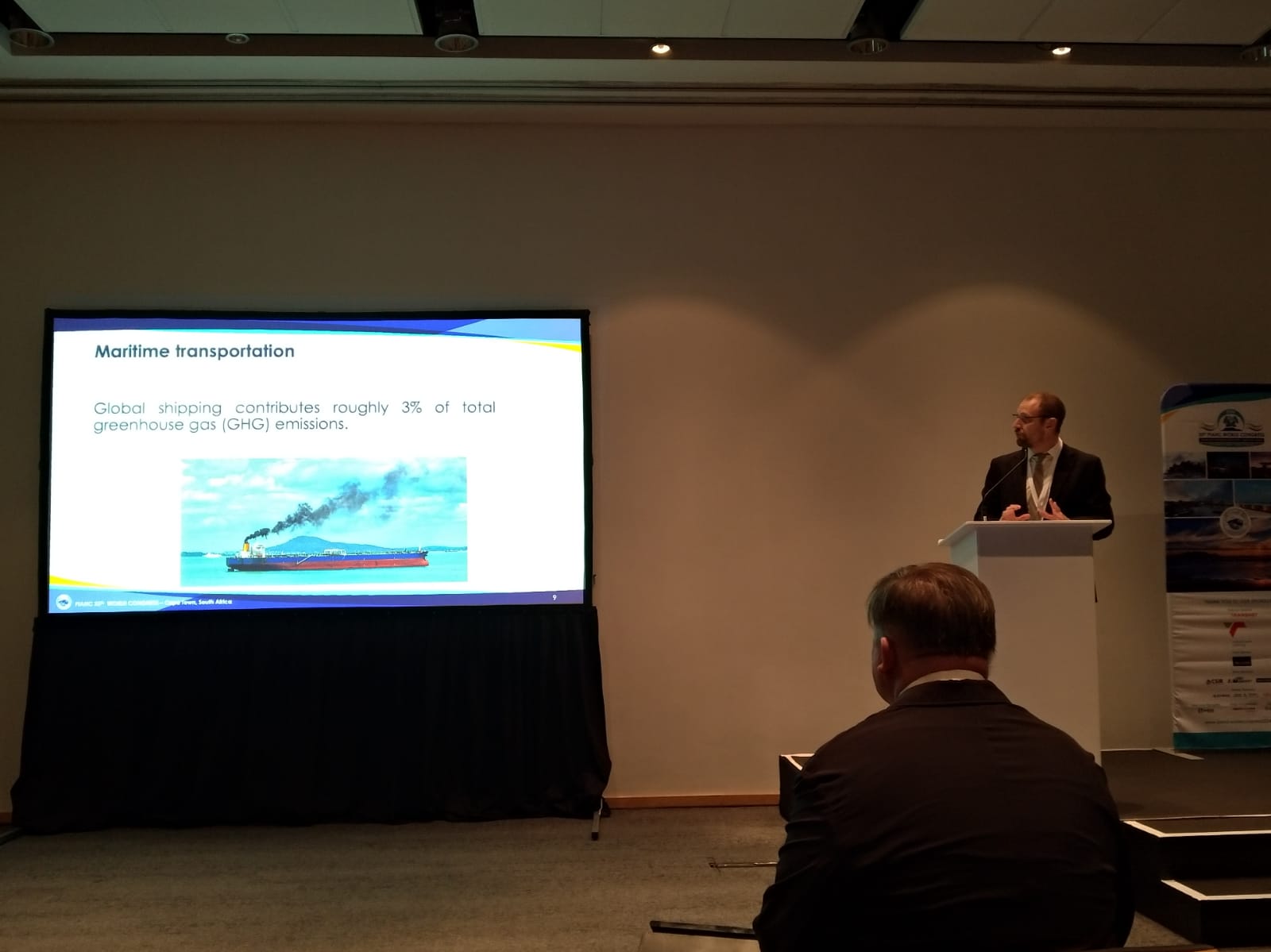
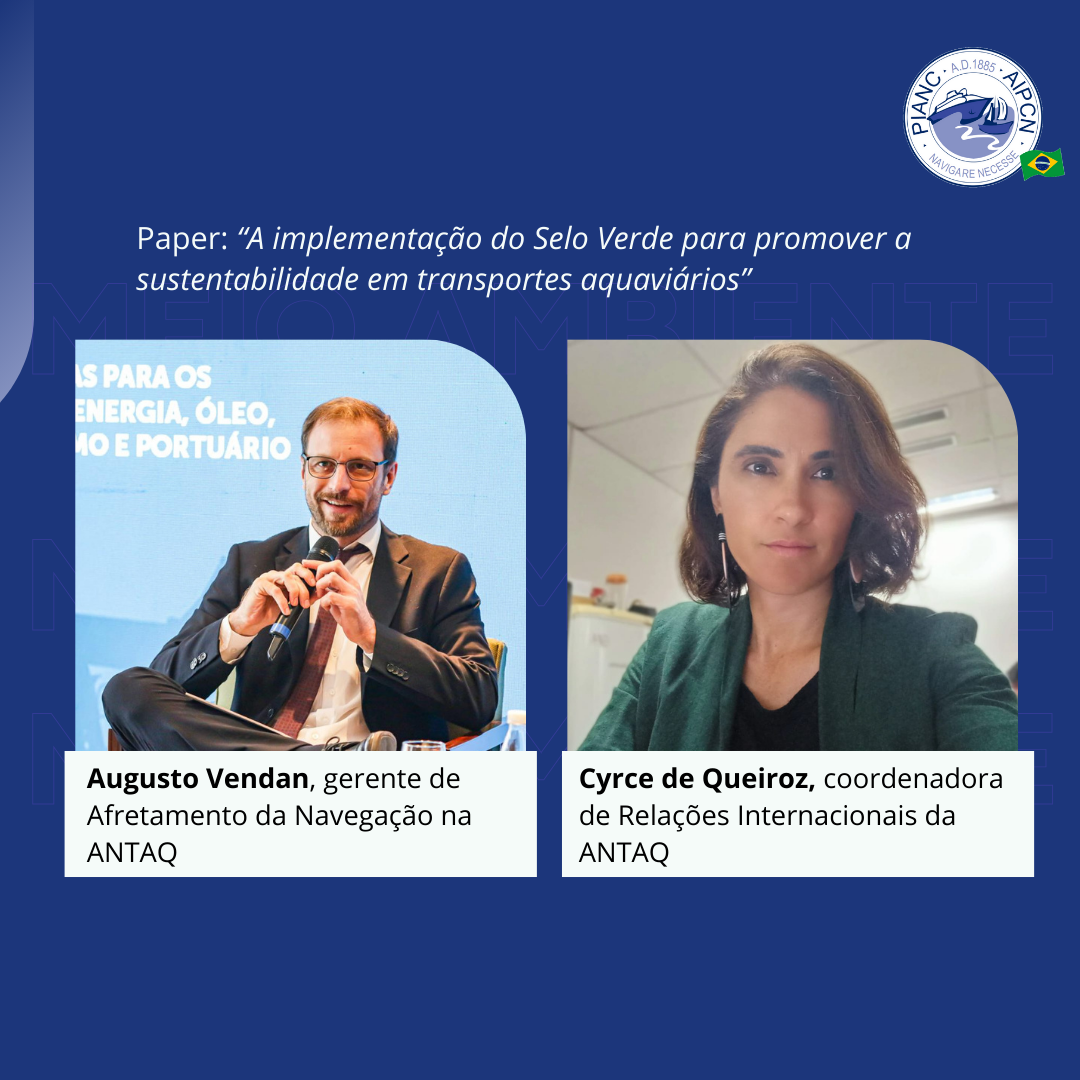
The implementation of a Green Seal for Brazilian navigation was the subject of a paper presented to PIANC during the World Congress of the Association, held in Cape Town, South Africa. In the technical panels, Augusto Vendan, ANTAQ Navigation Charter Manager, pointed out that the agency studies the creation of the seal to promote sustainability in national maritime transport and reduce greenhouse gas emissions. The work, written by Vendan in partnership with Cyrce de Queiroz, coordinator of International Relations at ANTAQ, reinforces the commitment of Brazilian technicians to innovation and sustainability.
The study proposes to evaluate the efficiency of the national fleet and then suggests the implementation of a seal for companies that adopt clean maritime navigation practices in their logistics chains, following internationally recognized methodologies. In practice, this would involve the public sector using regulatory tools to identify environmental solutions in river transport and promote more sustainable practices through its regulatory structure.
Vendan explains that the intention is that the seal be implemented both in cabotage. “World maritime transport emits about 3% of carbon dioxide emissions, and although it is significantly cleaner, it is also slower than trucks, trains and aircraft. Therefore, the idea is to further improve the reduction of carbon dioxide emissions, which is already ongoing at the world level through improvements in ship speed and fuel quality”, he explains.
The proposal is that the seal be applied to vessels, but that they also have an impact on transported products. This could lead people to recognize that the transport of that product was carried out with a more responsible environmental approach. Thus, this initiative has the potential to benefit both the maritime sector and the port sector by promoting a broader and more positive environmental awareness.
“Ships carry large volumes of cargo of various types, and at a time when awareness of the exploration of the chain is growing, this seal can be a catalyst for a positive cycle, recognizing the efficiency and social benefits of impacting the environment less,” he adds.
In the study, experts point out that Brazil is a member of the International Maritime Organization (IMO) and highlight the commitment of member states to adopt measures to reduce greenhouse gas emissions from ships. An initial strategy was adopted in 2018, establishing a zero net emissions target by 2050, with a 30% reduction by 2030.
It is in this sense that the creation of a green seal for companies in the sector emerges as a potential solution to align emission reduction targets with the development of maritime transport, encouraging more sustainable practices for companies and consumers.
The work was presented at the World Congress of the PIANC, which took place between April 29 and May 3 in Cape Town, South Africa. A total of 13 Brazilian works were highlighted during the international event. Among them are contributions from ANTAQ technicians, representatives of ports, shipping companies and Brazilian educational institutions.